


3 Causes of Mounjaro Face: GLP-1 Facial Hollowing Guide
What Is “Ozempic Face”?
Causes, Types, and Professional Aesthetic Solutions
In recent years, many people have achieved significant weight loss through GLP-1 medications, often referred to as “weight-loss injections.” While these medications can be highly effective for reducing body weight, another unexpected side effect has emerged: the face may appear older, more hollow, and more sagging after rapid weight loss.
This phenomenon is commonly referred to as “Ozempic Face.”
Many individuals expect their facial features to look more refined after losing weight. However, they may instead notice sunken cheeks, deeper nasolabial folds, sagging around the mouth, and an overall tired or aged appearance. In some cases, people even feel they look 10 years older in photos.
This is not simply due to fat loss. Rather, it reflects a loss of structural support in the face, which leads to an overall visual aging effect.
In this article, we will explain from a professional aesthetic medicine perspective:
-
What Ozempic Face is
-
Why it occurs
-
Different types of facial changes after rapid weight loss
-
And the most effective treatment options to restore a youthful appearance
Whether you are currently using GLP-1 medications or have already noticed facial volume loss, this guide will help you better understand your options.
What Is Ozempic Face?
Definition and Visual Characteristics
Ozempic Face refers to facial volume loss and sagging that occurs after rapid weight loss caused by GLP-1 medications such as Ozempic, Wegovy, or Mounjaro.
These medications can lead to significant fat reduction throughout the body, including the face. When facial fat decreases rapidly and collagen levels decline, the face may appear hollow and aged.
Common features include:
-
Noticeable loss of cheek volume (sunken cheeks)
-
Deepened nasolabial folds
-
Sagging jowls or marionette lines
-
Hollow temples
-
Loss of jawline definition
-
Overall tired or aged appearance
These changes are usually caused by two key factors combined:
-
Rapid reduction of facial fat
-
Loss of structural support within facial tissues
How Ozempic Face Differs from Natural Aging
Natural facial aging typically develops gradually over 10–20 years.
However, Ozempic Face can develop much faster — often within 2 to 6 months following rapid weight loss.
Because of this, the treatment strategy is different from traditional anti-aging procedures.
Simply tightening the skin or only adding fillers is usually not enough. Instead, a layered and customized treatment approach is required.
Causes of Ozempic Face
Ozempic Face is not simply the result of fat loss. It is typically caused by accelerated aging across multiple facial layers.
Three main structural changes contribute to this condition.

The most immediate effect of rapid weight loss is a reduction in facial fat volume.
Areas most affected include:
-
Malar fat pad (cheek fat)
-
Sub-malar fat (below the cheekbone)
-
Under-eye fat (deepening tear troughs)
-
Lower facial fat pads (leading to jowls and marionette lines)
Facial fat acts like a natural cushion that supports the skin. When it disappears, the skin loses support and begins to collapse inward.
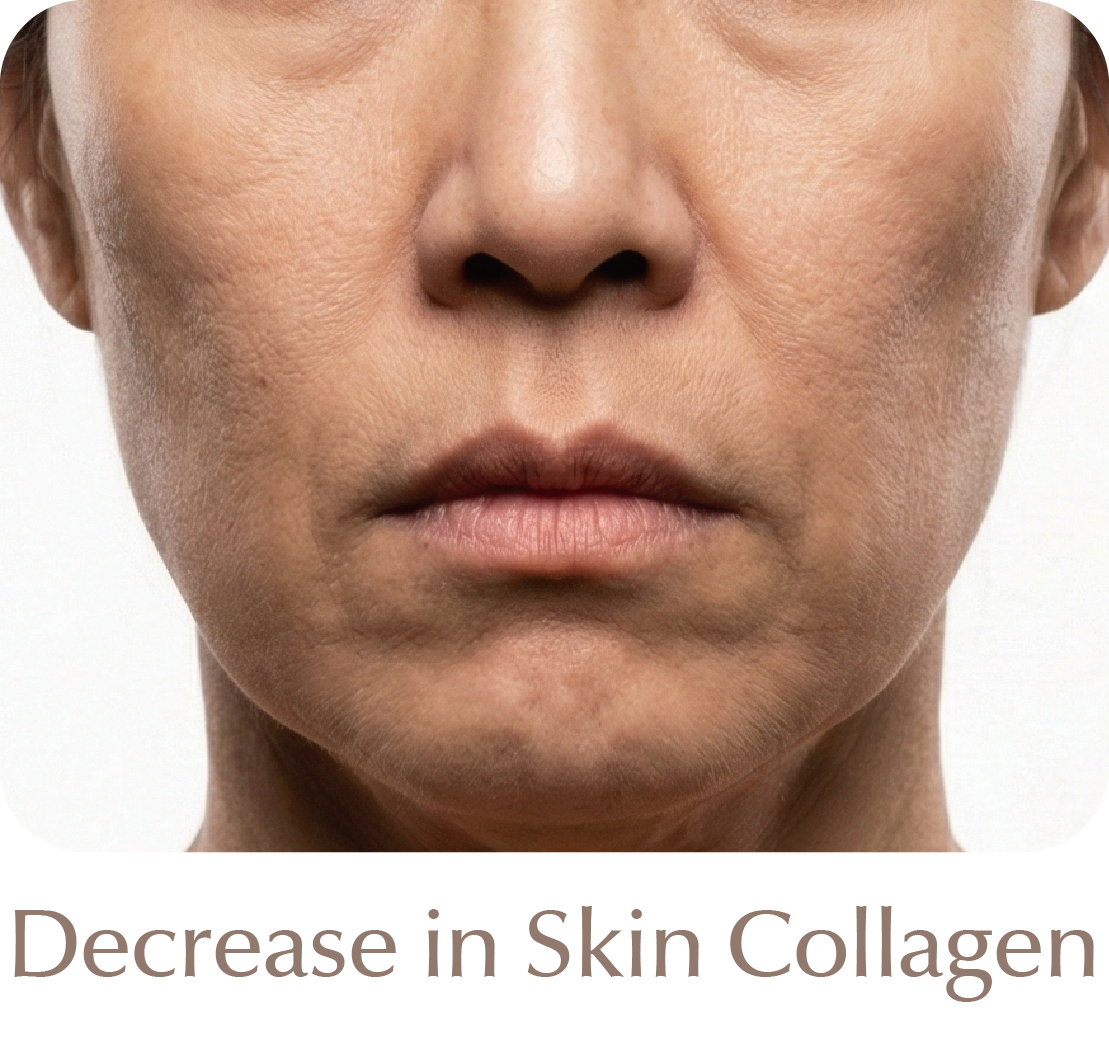
GLP-1 medications may also contribute to mild dehydration and changes in skin metabolism. Many users report:
-
Thinner skin
-
More visible fine lines
-
Reduced elasticity
When fat loss is combined with collagen decline, facial aging can appear much more pronounced.

Without adequate fat support, gravity pulls facial tissues downward more easily.
This can lead to:
-
Deeper nasolabial folds
-
Sagging around the mouth
-
Blurred jawline definition
-
Increased wrinkles around the mouth
This explains why some people look older in photos after losing weight, even though their body appears slimmer.
Types of Ozempic Face
After rapid weight loss, facial changes can vary from person to person. Based on clinical observations, Ozempic Face can generally be categorized into four main types.
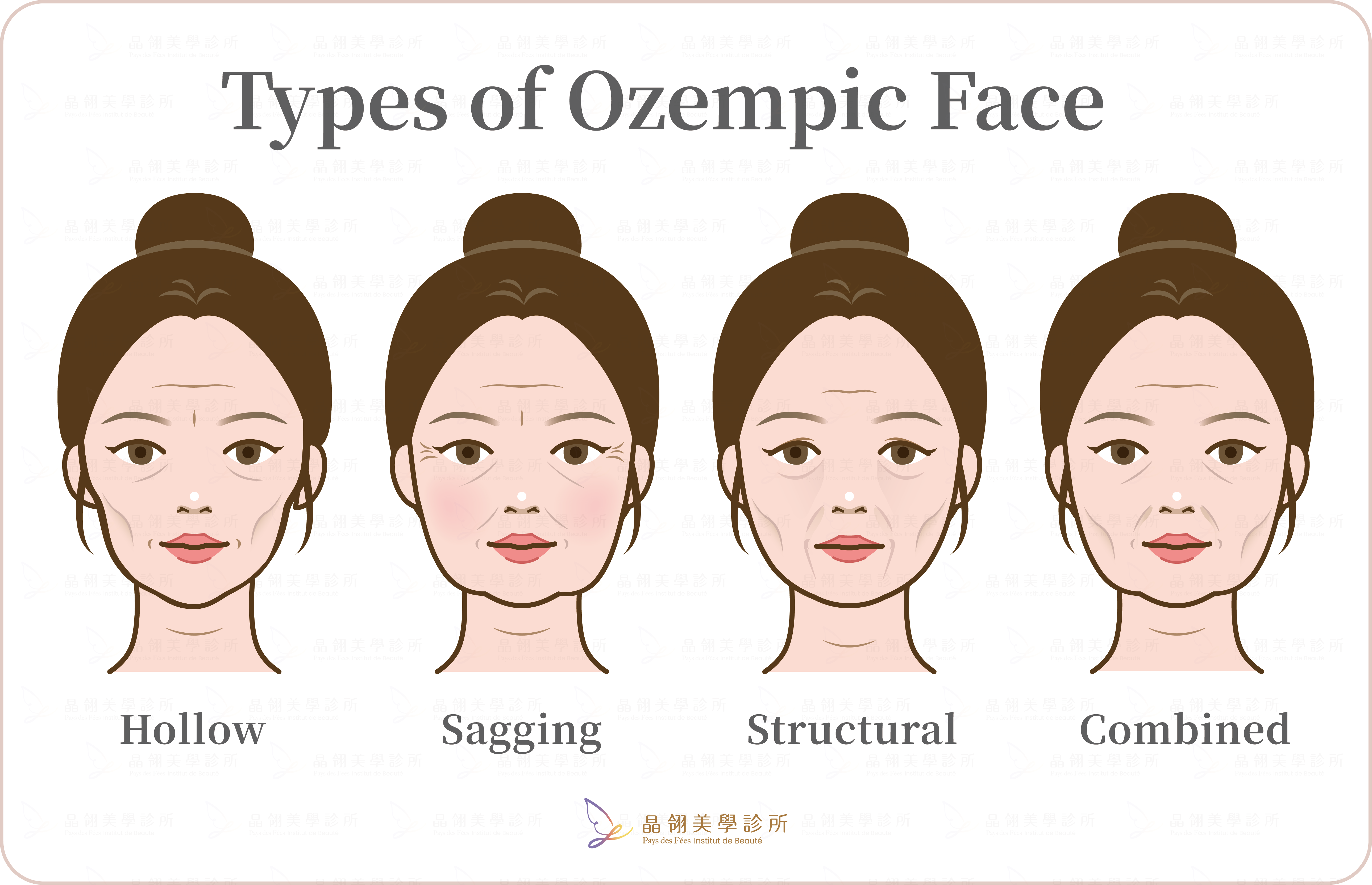
1. Hollow Type (Volume Loss)
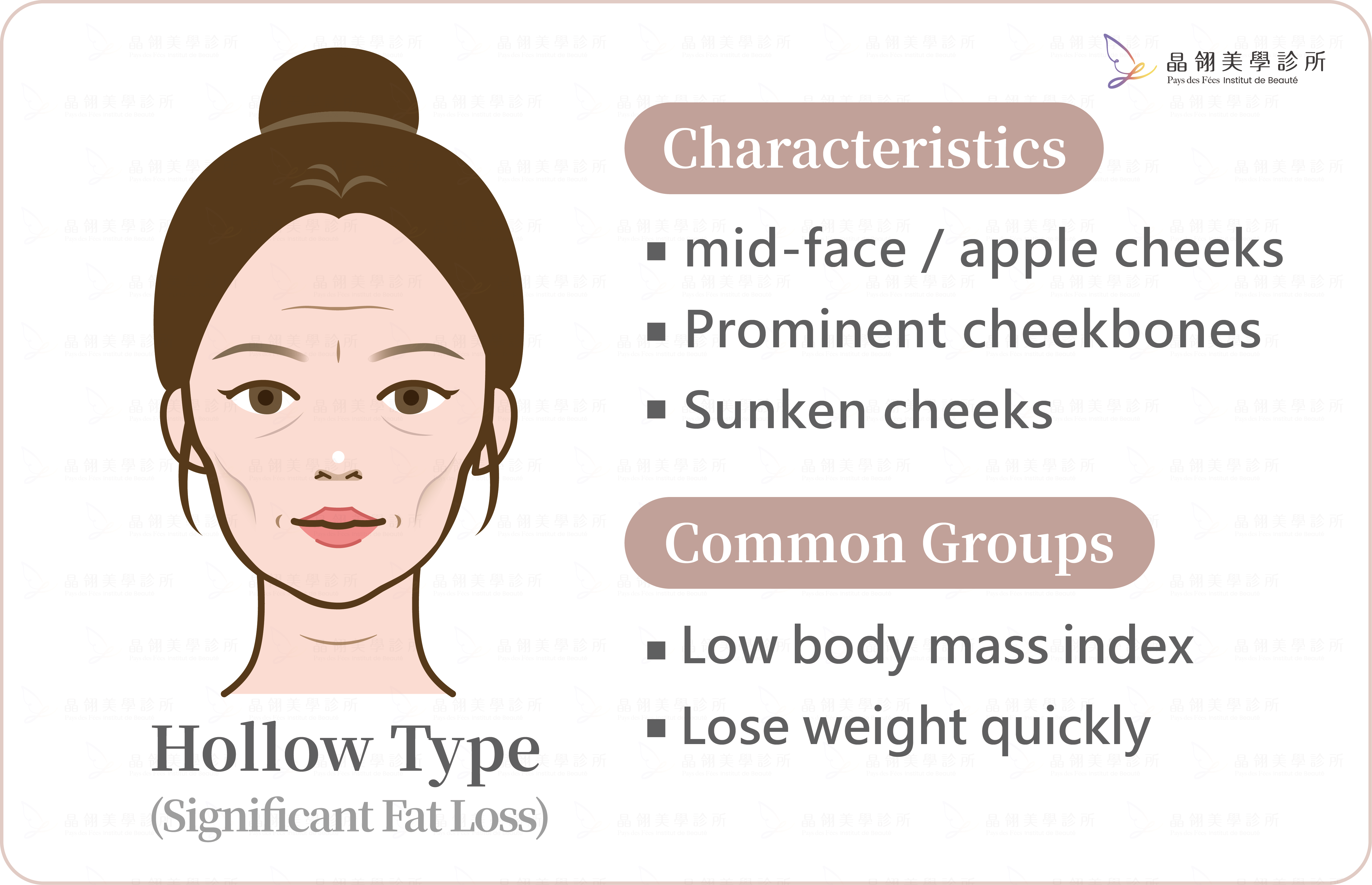
Characteristics:
-
Sunken temples
-
Hollow cheeks
-
Dark under-eye shadows
-
Sharper, gaunt facial appearance
Common among:
-
Individuals with naturally low BMI
-
People aged 20–40 who experience rapid weight loss
2. Sagging Type (Loss of Elasticity)
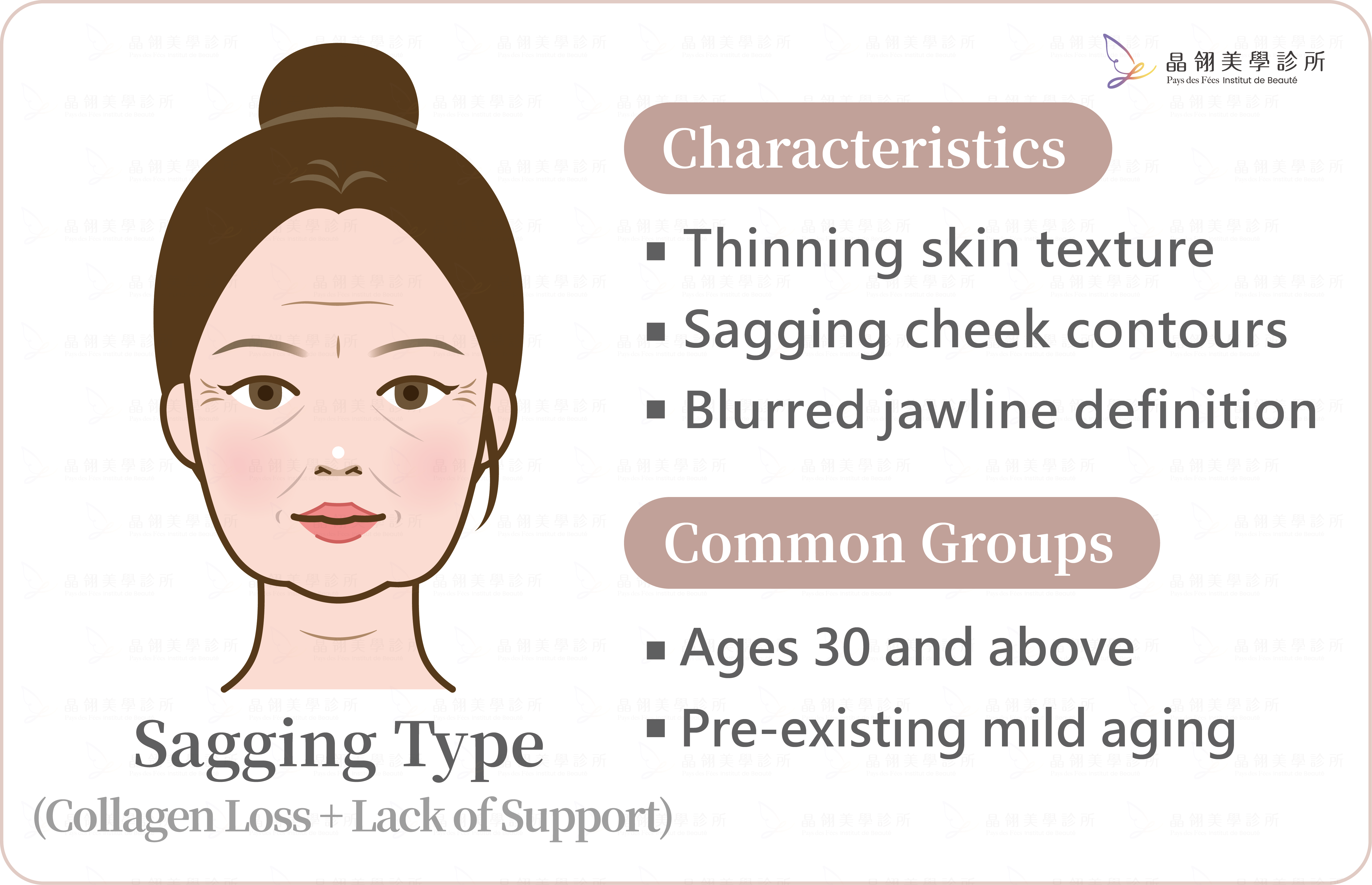
Characteristics:
-
Thinner skin
-
Drooping cheeks
-
Blurred jawline
Common among:
-
People over 30
-
Individuals with pre-existing mild aging
3. Structural Type (Weak Bone Support)
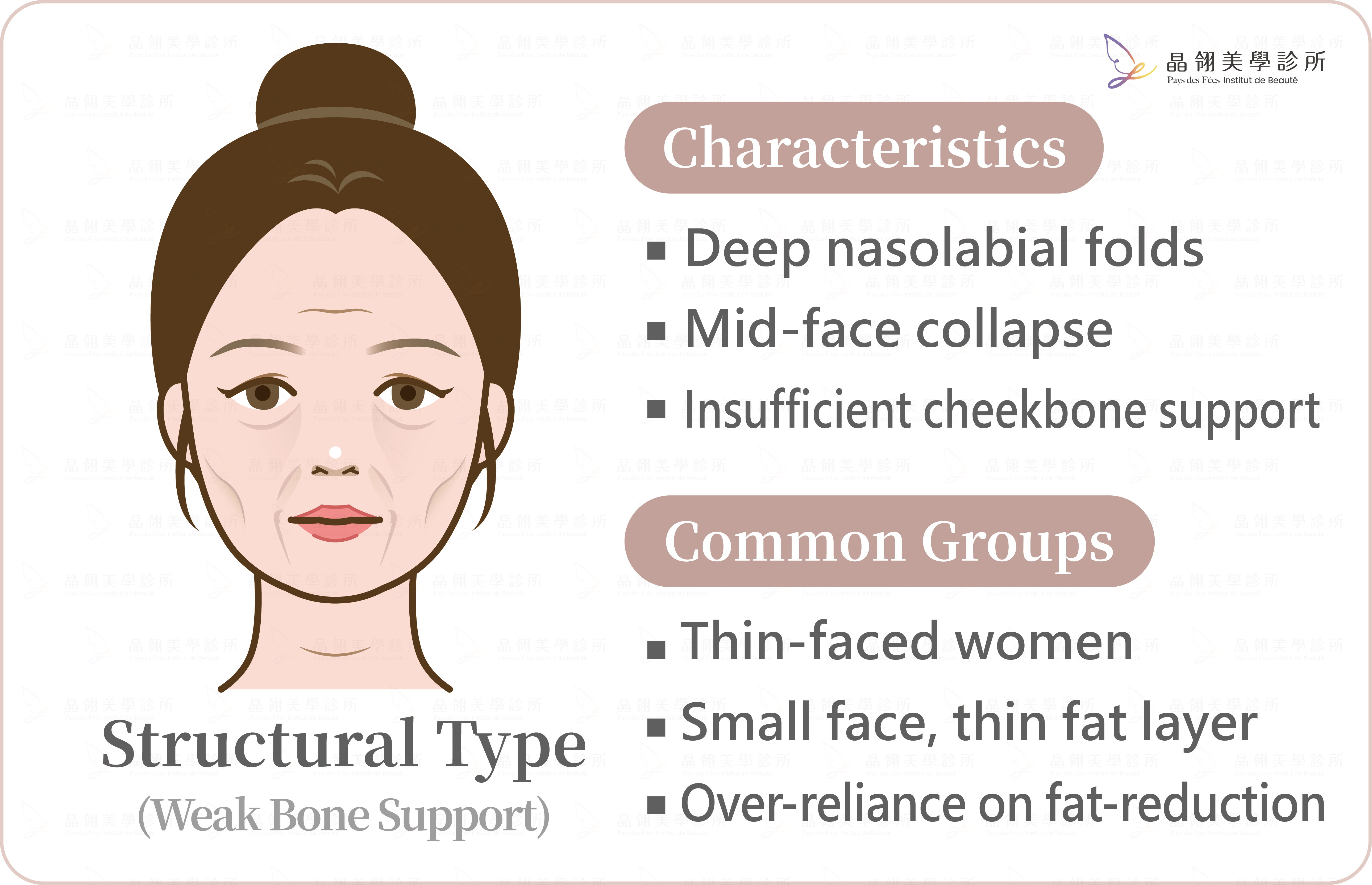
Characteristics:
-
Midface collapse
-
Insufficient cheekbone support
-
Deep nasolabial folds even without significant weight loss
Common among:
-
Individuals with smaller facial bone structures
-
Long face shapes
-
Naturally thin facial fat layers
4. Combined Type (Most Common)
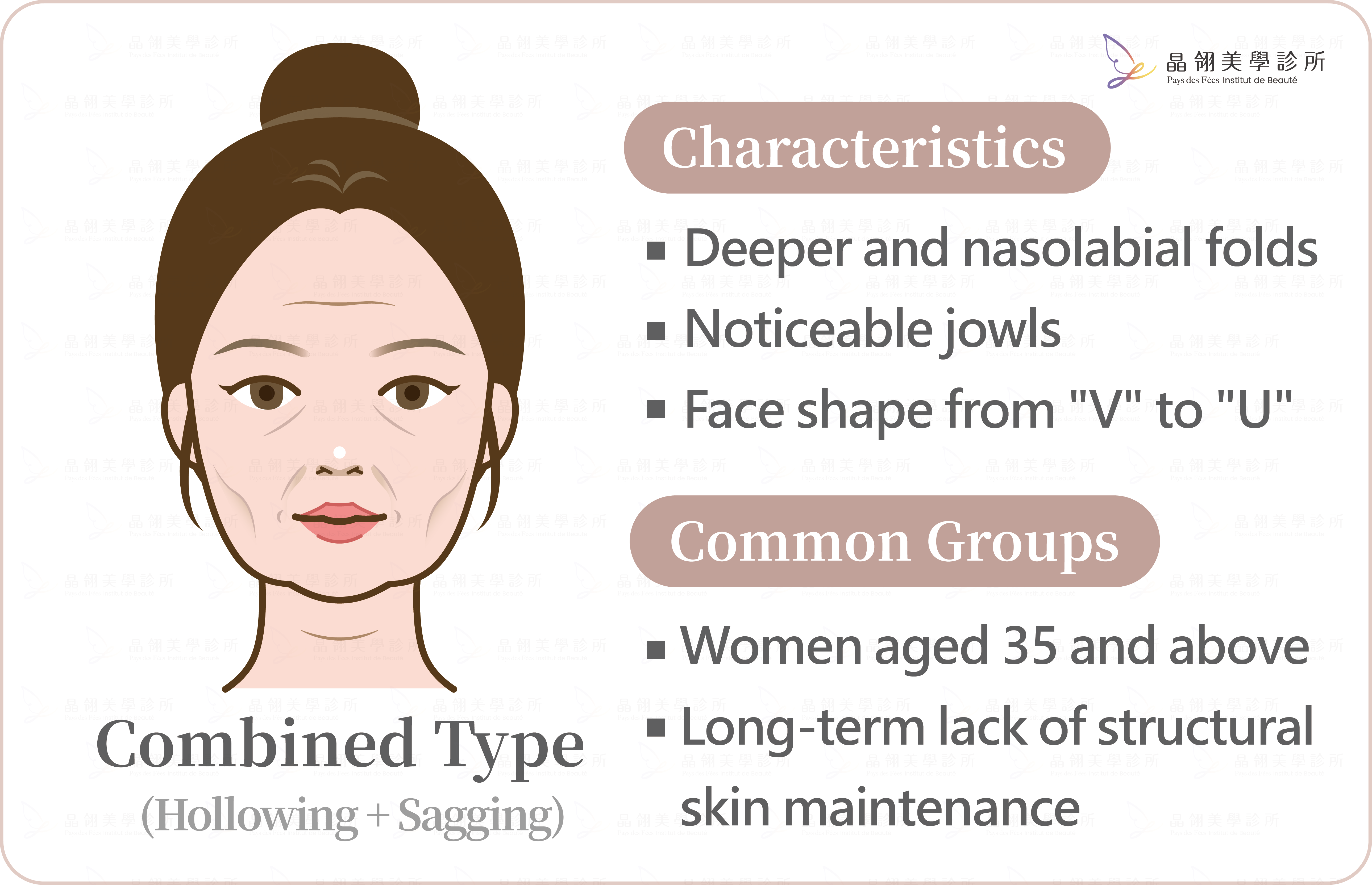
Characteristics:
-
Both hollowing and sagging
-
Deep nasolabial folds
-
Noticeable jowls
-
Facial shape shifting from V-shape to U-shape
Common among:
-
Women over 35
-
Individuals who lost weight rapidly without facial treatment
This type usually requires combination treatments.

Treatment Options for Ozempic Face
Effective treatment typically involves addressing volume loss, skin laxity, and skin quality simultaneously.
Volume Restoration Treatments
Best for:
-
Hollow cheeks
-
Loss of cheek volume
-
Sunken temples
-
Deep nasolabial folds
Hyaluronic Acid Fillers
Hyaluronic acid is one of the most effective ways to restore facial volume.
Benefits:
-
Restores lost volume
-
Enhances facial contours
-
Adjustable and reversible
-
High safety profile
Common treatment areas:
-
Cheeks
-
Midface
-
Nasolabial folds
-
Temples
-
Jawline and chin
Fat Grafting
For severe fat loss, autologous fat transfer can provide longer-lasting volume restoration.
Advantages:
-
Suitable for large volume loss
-
Results may last several years once fat survives
Collagen Stimulators
Products such as Ellansé or Sculptra stimulate natural collagen production.
Benefits:
-
Gradual, natural improvement
-
Long-lasting results (often 1.5–2 years)
-
Improves both volume and skin quality
Lifting Treatments for Sagging
Best for:
-
Jowls
-
Blurred jawline
-
Deep nasolabial folds
Ultrasound Lifting
Ultrasound energy targets the SMAS layer, tightening deeper tissues and lifting sagging skin.
Benefits:
-
Strong lifting effect
-
Minimal downtime
Radiofrequency Skin Tightening
Radiofrequency stimulates collagen remodeling.
Benefits:
-
Improves skin firmness
-
Smooths fine lines
EMFACE
EMFACE combines radiofrequency skin tightening with electromagnetic muscle stimulation.
Advantages:
-
Strengthens facial muscles
-
Improves skin firmness
-
Non-invasive and needle-free
Thread Lifting
Thread lifts provide structural lifting for sagging tissues.
Benefits:
-
Immediate lifting effect
-
Effective for midface and jawline contouring
Skin Quality Treatments
GLP-1 users often experience thinner or dehydrated skin. Skin quality treatments can help restore elasticity and hydration.
Common options include:
-
Microneedling RF for collagen stimulation
-
PRP therapy to promote tissue regeneration
-
Skin boosters to improve hydration and skin texture
Can Ozempic Face Be Reversed?
The degree of recovery depends on severity.
-
Mild cases may improve naturally
-
Moderate cases usually require fillers or lifting treatments
-
Severe cases often need combination therapies
Because facial fat typically does not regenerate naturally, volume restoration is often necessary.
Why Choose Professional Aesthetic Evaluation?
Treating Ozempic Face requires a comprehensive understanding of:
-
Facial anatomy
-
Structural aging layers
-
Changes caused by rapid weight loss
A customized approach is essential to restore natural facial balance and youthful contours.
If you have experienced facial hollowing or sagging after weight loss, professional assessment can help determine the most appropriate treatment plan.
A well-designed treatment strategy can effectively restore:
-
Facial volume
-
Skin firmness
-
Natural facial harmony


